



Modernity and Social Change in Europe and the Emergence of Sociology
Modernity
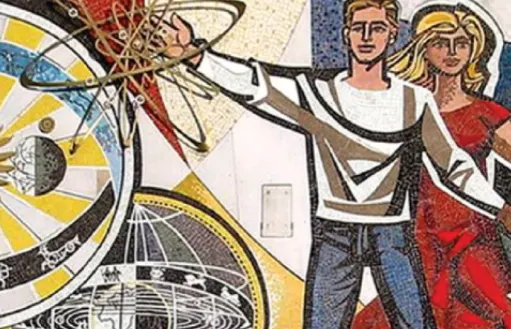
Modernity refers to a distinct phase in human history marked by a shift from metaphysical and supernatural explanations toward rational, scientific, and empirical reasoning. It emphasized individualism, industrialization, technological innovation, and a departure from rigid traditional structures. In sociology, modernity represents a period of profound scientific, technological, and socio-economic transformation, beginning around 1650 in Europe and continuing until the mid-20th century.
Key Historical Forces Behind Modernity and the Rise of Sociology
1. The Renaissance (14th–17th Century)

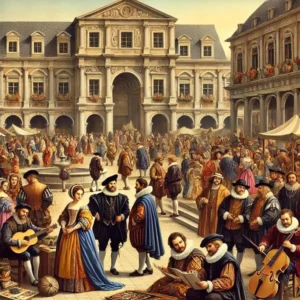
The Renaissance was a dynamic era of cultural, artistic, political, and intellectual revival following the Middle Ages. It fostered the rediscovery of classical learning and laid the foundations for modern science and humanism. This period bridged the medieval and modern worlds.
Major Changes During the Renaissance:
- Art and Humanism: Artists began to study nature and the human body scientifically, depicting them with anatomical precision.
- Medicine: Human dissection became acceptable, advancing knowledge of anatomy and physiology.
- Chemistry: The study of processes such as oxidation and distillation led to the birth of modern chemistry.
- Navigation and Astronomy: Explorations by Columbus and Vasco da Gama expanded trade and early colonialism, while interest in astronomy grew.
- The Copernican Revolution: Copernicus’ heliocentric theory challenged long-held geocentric beliefs, revolutionizing scientific thought.
The Renaissance encouraged humanism, empiricism, rationality, and scientific inquiry, paving the way for modern thinking.
2. The Enlightenment (1680s–1789)
The Enlightenment, centered mainly in France and Britain, was an intellectual movement emphasizing reason, logic, and scientific inquiry over superstition and tradition. Thinkers like Locke, Voltaire, Rousseau, Montesquieu, and Mary Wollstonecraft promoted liberty, equality, and human rights—principles that later influenced revolutions and democratic governance.
Key Ideas and Thinkers:
- Montesquieu: Advocated separation of powers in The Spirit of the Laws.
- Locke: Proposed that all individuals possess “inalienable rights” to life, liberty, and property.
- Voltaire: Defended freedom of speech and religious tolerance.
- Rousseau: In The Social Contract, emphasized popular sovereignty and self-governance.
- Wollstonecraft: Argued for gender equality and rational education for women.
Major Transformations During the Enlightenment:
- Promotion of reason and science over superstition.
- Spread of human rights and democratic ideals.
- Rise of secularism and decline of Church authority.
- Inspiration for revolutions (American and French).
- Emphasis on education, literacy, and social reform.
3. The French Revolution (1789–1799)
The French Revolution was a turning point in European history, leading to the end of absolute monarchy and the emergence of democratic and republican values. It reflected Enlightenment ideals of liberty, equality, and fraternity.

Causes:
- Social inequality between clergy, nobility, and commoners.
- Economic distress due to wars, debts, and high taxation.
- Influence of Enlightenment thought challenging traditional authority.
- Weak leadership of King Louis XVI.
- Political discontent from lack of representation.
Consequences:
- Abolition of monarchy and feudalism.
- Rise of republicanism and democratic principles.
- Emergence of radicalism and political factions.
- Global influence on revolutionary movements and ideas of citizenship and rights.
4. The Industrial Revolution (1760 onwards)
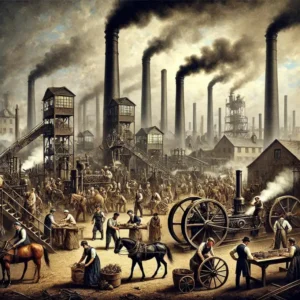
Originating in England, the Industrial Revolution transformed Europe economically, technologically, and socially. It marked the shift from agrarian economies to industrial capitalism and the factory system.
Major Changes:
- New Working Class: Workers faced harsh conditions, leading to awareness of social inequality.
- Urbanization: Growth of cities brought overcrowding and poverty.
- Rise of Capitalism: Shift of power from landlords to industrial capitalists.
- Technological Progress: Mechanization revolutionized production.
- Emergence of the Nuclear Family: Traditional kinship structures weakened.
- Colonial Expansion: Industrial needs spurred imperialism and global trade.
The Industrial Revolution thus redefined human labor, social structures, and economic relations—creating both progress and deep social problems.
Conservative Reaction to Modernity
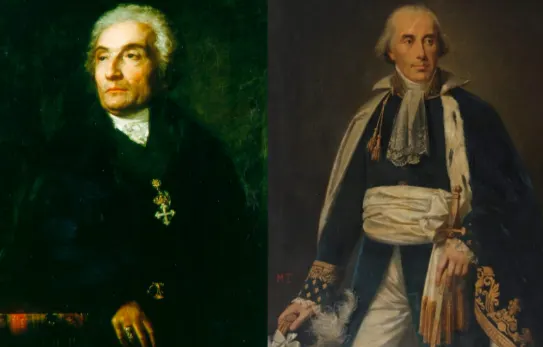
Conservative thinkers such as Louis de Bonald and Joseph de Maistre strongly opposed the radical transformations brought about by modernity—particularly those following the French and Industrial Revolutions. They regarded these rapid social, political, and economic changes as disruptive forces that undermined the moral fabric and divine order of society.
Both philosophers viewed society as a sacred creation ordained by God, not a human construct open to constant reform or experimentation. They believed that attempts to redesign society through reason or revolution violated this natural order and led to chaos, moral decay, and social fragmentation.
Bonald and de Maistre defended traditional institutions such as religion, monarchy, patriarchy, and the Church, which they saw as essential pillars of stability and moral guidance. They feared that modern ideas like individualism, secularism, and rationalism weakened communal bonds and eroded respect for authority.
To them, revolutions and industrialization replaced organic social unity with artificial and mechanical relationships, producing alienation, moral confusion, and class conflict. Thus, conservatives emphasized the need for hierarchical order, obedience, and faith to preserve social harmony.
In essence, the conservative response to modernity was a reaction against the Enlightenment’s faith in progress and reason, aiming instead to restore continuity, stability, and spiritual coherence in a rapidly changing world.
Critical Reflections on Modernity
Modernity, though celebrated for its progress and rationality, also attracted significant critique from classical sociologists who examined both its constructive and disruptive consequences.
Émile Durkheim analyzed how the transition from agrarian to industrial society disrupted traditional social bonds. He introduced the concept of anomie, referring to a state of normlessness and social instability arising when rapid change weakens shared values and moral guidance. Durkheim believed that society must consciously rebuild social solidarity through institutions and collective conscience to restore order in the modern world.
Karl Marx, on the other hand, viewed modernity through the lens of historical materialism. While he acknowledged that capitalism and industrialization revolutionized production and created vast wealth, he argued that they also generated class inequality, exploitation, and alienation. Workers became estranged from their labor, the products they created, and even from one another. Marx saw these contradictions as inherent to capitalism and predicted that they would ultimately lead to its downfall and the rise of a classless society.
Auguste Comte, often called the Father of Sociology, approached modernity with optimism. He proposed positivism, a scientific and systematic method to study social phenomena. Comte believed that just as natural sciences uncover laws of nature, sociology could discover the laws governing social order and progress. Through the application of scientific reasoning, he envisioned society evolving toward stability, harmony, and moral progress.
Max Weber offered a more nuanced and ambivalent assessment. He admired modern rationality but warned against its excesses. According to Weber, the increasing dominance of bureaucracy and rationalization in modern societies led to the “iron cage” of rationality, where individuals become trapped in systems of control and efficiency, losing spontaneity and freedom. Nonetheless, he believed that sociology, through rational and interpretive understanding, could help individuals navigate the uncertainties of modern life.
In essence, while modernity was celebrated for advancing science, democracy, and individual freedom, these thinkers recognized its darker side—social disintegration, inequality, alienation, and moral uncertainty. Their analyses laid the foundation for sociology as a discipline devoted to understanding and addressing the complex consequences of modern change.
How Social Changes Led to the Emergence of Sociology

The rapid transformations of modern Europe—driven by the Renaissance, Enlightenment, French Revolution, and Industrial Revolution—produced profound social, economic, and political upheavals. Traditional disciplines, such as philosophy, law, and history, were insufficient to fully explain these new social realities, prompting the need for a systematic study of society.
Key Social Impacts Leading to Sociology:
- Social Dislocation: Urbanization and industrialization broke down long-standing communities and traditional social bonds, creating social instability.
- Class Inequality: Capitalist economic structures generated stark disparities between the wealthy industrialists and the working class, highlighting the need to study structural inequality.
- Alienation: Workers became disconnected from their labor, society, and even themselves, raising questions about human welfare and social organization.
- Environmental and Cultural Changes: Industrialization caused pollution and eroded traditional cultural practices, prompting reflection on human-nature interactions and social continuity.
- Labor Exploitation and Individualism: Harsh working conditions and the rise of self-interest challenged moral and social cohesion.
- Political Upheaval: Revolutions and demands for rights demonstrated the dynamic and sometimes volatile nature of modern societies.
These challenges created an intellectual demand for understanding, explaining, and managing social change scientifically. Thinkers responded as follows:
- Saint-Simon proposed a “science of society” or social physics to systematically study social organization and progress.
- Auguste Comte coined the term sociology and emphasized positivism, advocating for observation, experimentation, and scientific methods to study society.
- Herbert Spencer introduced social evolution, comparing societal development to biological evolution.
- Émile Durkheim institutionalized sociology as an academic discipline, analyzing social facts, cohesion, and collective norms.
Empirical surveys, such as “The State of the Poor”, revealed that poverty and social problems were products of societal structures rather than natural inevitabilities, underscoring the need for a scientific approach.
Conclusion
Sociology emerged from the profound social, economic, and intellectual upheavals that accompanied modern European transformations. The processes of industrialization, urbanization, and political revolutions disrupted traditional social structures, creating new challenges such as inequality, alienation, and social instability. In response, thinkers sought a systematic and scientific approach to understand, explain, and manage these changes. Thus, sociology developed as the science of modern society, aimed at analyzing the causes and consequences of social transformation and providing insights to address the complexities of modern life.
Previous Year Questions
- How had Enlightenment contributed to the emergence of Sociology? (2015)
- Discuss the historical antecedents of the emergence of Sociology as a discipline (2019)
- How did the intellectual forces lead to the emergence of Sociology? Discuss (2020)
- Europe was the first and the only place where modernity emerged. Comment (2021)
- What aspects of Enlightenment do you think paved way for the emergence of Sociology? Elaborate (2022)
- Sociology is the product of European Enlightenment and Renaissance. Critically examine this statement. (2024)
Important Keywords
Modernity, The Renaissance, The Enlightenment, The French Revolution, The Industrial Revolution, Urbanization, Emergence of Sociology, Saint Simon, Auguste Comte, Herbert Spencer, and Émile Durkheim, Social Changes, Monarchy, Vasco da Gama, Columbus, Louis de bonald, Joseph de Maistre and Individualism.


UPSC Current Affairs – July 24th
Stay connected via Google News Follow us for the latest travel updates and guides. July11th Current Affairs <a href=”https://primusias.com”>Home</a> /
UPSC Current Affairs – July 18th
Stay connected via Google News Follow us for the latest travel updates and guides. July18th Current Affairs <a href=”https://primusias.com”>Home</a> /
UPSC Current Affairs – July 17th –
Stay connected via Google News Follow us for the latest travel updates and guides. July17th Current Affairs <a href=”https://primusias.com”>Home</a> /
UPSC Current Affairs – July 16
Stay connected via Google News Follow us for the latest travel updates and guides. July 16th Current Affairs <a href=”https://primusias.com”>Home</a>
UPSC Current Affairs – July 15th
Stay connected via Google News Follow us for the latest travel updates and guides. July15th Current Affairs <a href=”https://primusias.com”>Home</a> /
UPSC Current Affairs – July 14th
Stay connected via Google News Follow us for the latest travel updates and guides. July14th Current Affairs <a href=”https://primusias.com”>Home</a> /
UPSC Current Affairs – July 13th
Stay connected via Google News Follow us for the latest travel updates and guides. July13th Current Affairs <a href=”https://primusias.com”>Home</a> /
UPSC Current Affairs – July 11th
Stay connected via Google News Follow us for the latest travel updates and guides. July11th Current Affairs <a href=”https://primusias.com”>Home</a> /
UPSC Current Affairs – July 10th
Stay connected via Google News Follow us for the latest travel updates and guides. July10th Current Affairs <a href=”https://primusias.com”>Home</a> /
UPSC Current Affairs – July 9th
Stay connected via Google News Follow us for the latest travel updates and guides. July 9th Current Affairs <a href=”https://primusias.com”>Home</a>
Related
Discover more from Primus Civil Services Academy
Subscribe to get the latest posts sent to your email.