



Research Methodology in Sociology
Research refers to a systematic, objective, and critical investigation of social reality with the aim of arriving at new, valid, and verifiable knowledge. In sociology, research occupies a central place as it enables the scientific study of social phenomena such as institutions, relationships, processes, and structures. Sociological research goes beyond commonsense understanding and relies on methodical procedures, theoretical frameworks, and empirical evidence.
According to C.R. Kothari, research is an academic activity that involves defining problems, formulating hypotheses, collecting and analyzing data, making deductions, and testing conclusions. However, as Reid pointed out in the context of social work research, research need not always be strictly ‘scientific’ in the positivist sense; it may also involve systematic collection of useful information to address social problems.
The concepts of research methods, methodology, approaches, and perspectives are often used interchangeably, leading to conceptual confusion. Hence, understanding the assumptions underlying different research techniques is essential for sociological inquiry.

Meaning of Research Methodology
Research methodology refers to the overall framework that guides the selection, application, and justification of research methods. It includes the philosophical assumptions, theoretical orientation, conceptual tools, and techniques used to study social phenomena.
While research methods denote specific techniques such as surveys, interviews, or experiments, research methodology provides the rationale for choosing those methods and explains how knowledge is generated and validated.
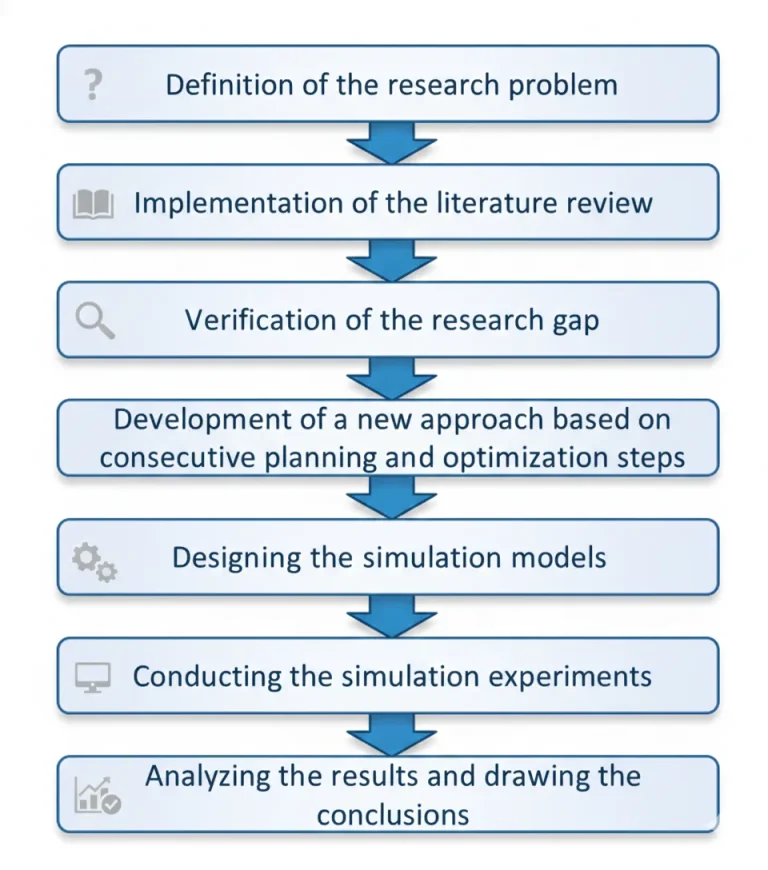
Elements of Research Methodology
1. Concepts
Concepts are the basic building blocks of sociological research and constitute the language of social science. They are abstract representations of social reality. Since social reality is multidimensional, concepts often convey multiple meanings and interpretations. For example, concepts such as class, power, status, or social mobility are defined differently across theoretical perspectives like Marxism, Functionalism, or Weberian sociology. Theoretical orientation thus plays a crucial role in defining concepts and providing coherence to sociological analysis.2. Propositions or Hypotheses
Propositions or hypotheses are statements that specify relationships between two or more concepts. They are logically derived and empirically testable assertions. For instance, “Higher levels of education lead to greater social mobility” is a hypothesis linking the concepts of education and mobility. The formulation of hypotheses involves explicit or implicit comparisons among variables within a defined universe of study.3. Theories
Theories are systematic sets of concepts and propositions that explain social phenomena by identifying underlying patterns, relationships, and principles. Sociological theories provide interpretative frameworks to understand empirical findings. For example, Durkheim’s theory of suicide explains variations in suicide rates through levels of social integration and regulation. Concepts and propositions together constitute theory, and theory in turn refines concepts—making the relationship cyclical and dynamic.Significance of Research Methodology in Sociology
Research methodology holds immense importance in sociological inquiry due to the following reasons:
- It provides scientific legitimacy and credibility to sociological knowledge.
- It distinguishes sociological analysis from commonsense and layperson understanding.
- It helps in diagnosing and solving social problems, thereby improving social conditions.
- It contributes to the development of context-specific methodologies, such as G.S. Ghurye’s Nationalist Indology.
- By systematically analyzing social behaviour, it enables social reform and social planning.
- It aids in policy formulation, prediction, and social control, especially in areas like poverty, health, education, and governance.
- It provides scientific legitimacy and credibility to sociological knowledge.
Types of Research Methodologies in Sociology
Sociological research may be theoretical or pragmatic in orientation. Regardless of its purpose, it must follow systematic and established research procedures. Broadly, research methodologies in sociology can be classified into four types:
1. Exploratory Research Methodology
Exploratory research is primarily qualitative and is undertaken when the researcher has limited prior knowledge about the problem.
Characteristics
- Useful for formulating hypotheses and identifying key variables.
- Assumes unfamiliarity with the structure of the phenomenon under study.
- Flexible and open-ended in nature.
Methods Used
- Case studies
- Review of existing literature
- Unstructured interviews
Relevance
Exploratory studies are particularly valuable in studying persistent and under-researched issues such as rural poverty, corruption, police harassment, or institutional failures. They help researchers break new theoretical and empirical ground.
2. Descriptive Research Methodology
Descriptive research aims at systematically describing social situations, events, structures, and institutions as they exist.
Characteristics
- Focuses on what is, rather than why it is.
- Researchers have no control over variables.
- Often referred to as ex post facto research in social sciences.
Methods Used
- Surveys
- Census data
- Structured questionnaires
Examples
A descriptive study on drug abuse may examine its extent, causes, patterns, sources, and consequences among different social groups.
Types
- Cross-sectional studies: Study phenomena at a single point in time.
- Longitudinal studies: Study changes over a period of time.
3. Experimental Research Methodology
Experimental research is considered the most rigorous method for establishing cause-and-effect relationships.
Key Features
- Manipulation of independent variables.
- Control over extraneous variables.
- Precise observation and measurement of outcomes.
Types of Experiments
- Laboratory experiments: Conducted under controlled conditions, allowing isolation of causal factors but often criticized for artificiality.
- Field experiments: Conducted in natural settings, offering greater realism but limited control.
Limitations
- Ethical and practical constraints in social settings.
- High cost and longer duration.
- Difficulty in generalizing laboratory findings to real-life situations.
Quasi-Experimental Studies
To overcome limitations, sociologists often rely on naturally occurring experiments, such as displacement due to development projects, which allow observation without artificial manipulation.
4. Comparative Research Methodology
The comparative method involves systematic comparison of social phenomena across societies, cultures, or historical periods to arrive at generalizations.
Key Thinkers
- Durkheim considered comparison as the “experimental method of sociology.”
- Haralambos and Holborn emphasized that comparative research relies on naturally occurring social situations rather than artificially created ones.
Example
Durkheim’s comparative study of suicide across countries identified social integration and regulation as key explanatory variables.
Limitations
- Relies partly on interpretation and speculation.
- Contextual differences may affect reliability of comparisons.
Research methodology forms the backbone of sociological inquiry by providing systematic, theoretically informed, and empirically grounded approaches to understanding social reality. Concepts, hypotheses, and theories together constitute the scaffolding of sociological research. Different methodologies—exploratory, descriptive, experimental, and comparative—offer complementary tools for studying the complexity of social life. A sound grasp of research methodology not only enhances academic rigor but also enables sociology to contribute meaningfully to social policy, planning, and transformation.
Important Keywords
Systematic Investigation, Scientific Study of Society, Positivist Tradition, Research Methodology vs Research Methods, Conceptual Framework, Concepts (Social Facts), Propositions / Hypotheses, Theory Construction, Empirical Evidence, Objectivity and Verifiability, Exploratory Research, Descriptive (Ex post facto) Research, Experimental Method, Quasi-Experimental Studies, Comparative Method, Cause–Effect Relationship, Social Planning and Policy, Formulation, Generalization of Findings, Context-Specific Methodologies, Scientific Legitimacy of Sociology.


UPSC Current Affairs – July 24th
Stay connected via Google News Follow us for the latest travel updates and guides. July11th Current Affairs <a href=”https://primusias.com”>Home</a> /
UPSC Current Affairs – July 18th
Stay connected via Google News Follow us for the latest travel updates and guides. July18th Current Affairs <a href=”https://primusias.com”>Home</a> /
UPSC Current Affairs – July 17th –
Stay connected via Google News Follow us for the latest travel updates and guides. July17th Current Affairs <a href=”https://primusias.com”>Home</a> /
UPSC Current Affairs – July 16
Stay connected via Google News Follow us for the latest travel updates and guides. July 16th Current Affairs <a href=”https://primusias.com”>Home</a>
UPSC Current Affairs – July 15th
Stay connected via Google News Follow us for the latest travel updates and guides. July15th Current Affairs <a href=”https://primusias.com”>Home</a> /
UPSC Current Affairs – July 14th
Stay connected via Google News Follow us for the latest travel updates and guides. July14th Current Affairs <a href=”https://primusias.com”>Home</a> /
UPSC Current Affairs – July 13th
Stay connected via Google News Follow us for the latest travel updates and guides. July13th Current Affairs <a href=”https://primusias.com”>Home</a> /
UPSC Current Affairs – July 11th
Stay connected via Google News Follow us for the latest travel updates and guides. July11th Current Affairs <a href=”https://primusias.com”>Home</a> /
UPSC Current Affairs – July 10th
Stay connected via Google News Follow us for the latest travel updates and guides. July10th Current Affairs <a href=”https://primusias.com”>Home</a> /
UPSC Current Affairs – July 9th
Stay connected via Google News Follow us for the latest travel updates and guides. July 9th Current Affairs <a href=”https://primusias.com”>Home</a>
Related
Discover more from Primus Civil Services Academy
Subscribe to get the latest posts sent to your email.