

August 29th Current Affairs
Table of Contents
UPSC Current Affairs – October 14th
Stay connected via Google News Follow us for the latest travel updates and guides. October 14th Current Affairs <a href=”https://primusias.com”>Home</a>
UPSC Current Affairs – October 13th
Stay connected via Google News Follow us for the latest travel updates and guides. October 13th Current Affairs <a href=”https://primusias.com”>Home</a>
UPSC Current Affairs – October 12th
Stay connected via Google News Follow us for the latest travel updates and guides. October 12th Current Affairs <a href=”https://primusias.com”>Home</a>
UPSC Current Affairs – October 9th
Stay connected via Google News Follow us for the latest travel updates and guides. October 9th Current Affairs <a href=”https://primusias.com”>Home</a>
UPSC Current Affairs – October 8th
Stay connected via Google News Follow us for the latest travel updates and guides. October 8th Current Affairs <a href=”https://primusias.com”>Home</a>
UPSC Current Affairs – October 6th
Stay connected via Google News Follow us for the latest travel updates and guides. October 6th Current Affairs <a href=”https://primusias.com”>Home</a>
UPSC Current Affairs – October 5th
Stay connected via Google News Follow us for the latest travel updates and guides. October 5th Current Affairs <a href=”https://primusias.com”>Home</a>
UPSC Current Affairs – October 1st
Stay connected via Google News Follow us for the latest travel updates and guides. October 1st Current Affairs <a href=”https://primusias.com”>Home</a>
UPSC Current Affairs – September 29th
Stay connected via Google News Follow us for the latest travel updates and guides. September 29th Current Affairs <a href=”https://primusias.com”>Home</a>
UPSC Current Affairs – September 28th
Stay connected via Google News Follow us for the latest travel updates and guides. September 28th Current Affairs <h4> Table
Dhaka Positively Open to Makkah Pact: A New Geopolitical Challenge for India
What is the news?
Bangladesh has indicated that it would positively consider joining the Makkah (Mecca) Joint Defence Agreement if it receives a formal invitation from the existing members. Bangladesh’s Foreign Minister Khalilur Rahman stated that Dhaka views the agreement positively, although no final decision on membership has been made.
This development is important for India’s neighbourhood security, South Asian geopolitics and West Asian strategic developments.
What is the Makkah (Mecca) Joint Defence Pact?
The Makkah Joint Defence Agreement is a collective security arrangement signed on 7 August 2026 by:
- Saudi Arabia
- Türkiye
- Pakistan
The agreement is based broadly on the principle of collective defence: an armed attack against one member is treated as an attack against all members. It envisages greater security and military cooperation among the participating countries.
Why is it compared with NATO?
The principle resembles NATO’s Article 5, which is based on the idea of collective defence.
Important UPSC point: The Makkah Pact is not NATO. The comparison is based on the collective-defence principle.
Bangladesh's Position
Bangladesh has stated that:
- It views the pact positively.
- It will consider joining if formally invited.
- No final decision or formal membership has yet been announced.
- Dhaka would examine the advantages and disadvantages before making a decision.
Thus, the present situation should be understood as:
Positive political signalling ≠ Confirmed membership
This distinction is important for UPSC answer writing.
Why may Bangladesh be interested?
- Security Cooperation
Membership could potentially provide Bangladesh with greater defence cooperation with:
- Saudi Arabia
- Türkiye
- Pakistan
Türkiye has significant defence-industrial capabilities, while Saudi Arabia has considerable economic and strategic influence in West Asia.
- Relations with the Islamic World
Bangladesh is a major Muslim-majority country. Participation could strengthen its engagement with important countries in the broader Islamic world.
- Foreign Policy Diversification
Bangladesh may seek to diversify its strategic partnerships rather than depending excessively on any single major power or neighbouring country. However, joining a formal defence arrangement could also make this balancing strategy more difficult.
Why is this important for India?
The development has significant implications for India’s national security.
India’s Ministry of External Affairs has stated that New Delhi is closely following developments that have implications for India’s national security.
- Pakistan Factor
Pakistan is already a founding member of the defence arrangement.
If Bangladesh eventually joins the pact, it could increase defence and security interaction between Bangladesh and Pakistan, which would be strategically significant from India’s perspective.
- India’s Neighbourhood First Policy
Bangladesh has traditionally been one of India’s most important neighbours.
India and Bangladesh cooperate in areas such as:
- Connectivity
- Trade
- Energy
- Border management
- Security
- Counter-terrorism
- Development cooperation
A major strategic realignment by Bangladesh could therefore affect India’s Neighbourhood First Policy.
- Security of India’s Eastern and North-Eastern Region
Bangladesh shares a long border with India and is geographically important for India’s access to the North-East.
Therefore, changes in Bangladesh’s external security partnerships are naturally important for India’s strategic calculations.
UPSC Keywords
- Neighbourhood security
- Strategic environment
- Regional balance of power
- Security dilemma
- External influence in South Asia
- Emerging Strategic Alignments
The possible expansion of the pact demonstrates a broader trend towards:
New and flexible security groupings outside traditional Cold War-era alliances.
This reflects the increasing importance of:
- Multipolarity
- Regional security arrangements
- Minilateralism
- Strategic autonomy
- Defence diplomacy
The Foreign Policy Challenge for Bangladesh
Bangladesh has historically sought to maintain balanced relations with multiple powers.
Joining a military or collective-defence grouping could create a difficult balancing act involving:
- India
- China
- United States
- Iran
- West Asian countries
- Other major economic and strategic partners
Analysts have noted that formal membership in a military bloc could make it harder for Bangladesh to maintain its traditional flexibility between competing geopolitical interests.
Broader Geopolitical Significance
West Asia + South Asia are becoming increasingly interconnected
The Makkah Pact links countries from both regions:
Region | Countries |
West Asia | Saudi Arabia, Türkiye |
South Asia | Pakistan |
Potential expansion | Bangladesh |
This demonstrates how security developments in West Asia can increasingly influence the strategic environment of South Asia.
India Signs Javelin Procurement Deal with the U.S.: Major Boost to Anti-Tank and Defence Capabilities
Why in News?
India has signed an agreement with the United States to procure the Javelin Anti-Tank Guided Missile (ATGM) system for the Indian Army through the U.S. Foreign Military Sales (FMS) process. The Indian Army signed a Letter of Offer and Acceptance (LOA), marking an important step in India–U.S. defence cooperation. The agreement could also open possibilities for future co-production and defence-industrial collaboration in India.
Reports indicate that the procurement is being undertaken to strengthen India’s anti-armour capabilities and operational preparedness. Some reports have put the emergency procurement deal at around ₹292 crore, although the officially announced agreement did not disclose the final quantity and value of the purchase.
What is the Javelin Missile System?
The FGM-148 Javelin is an advanced, portable anti-tank guided missile system developed in the United States.
Key Features
- Man-portable: Can be carried and operated by infantry soldiers.
- Fire-and-forget: After locking onto the target and launching the missile, the operator does not need to continuously guide it.
- Anti-armour capability: Designed primarily against tanks and other armoured vehicles.
- Precision weapon: Uses advanced guidance technology.
- Multiple targets: Can also be used against fortified positions and other battlefield targets.
The system is produced by the Javelin Joint Venture, involving RTX and Lockheed Martin.
Why is the “Fire-and-Forget” Feature Important?
Traditional guided missiles may require the operator to continue tracking or guiding the missile after launch.
In a fire-and-forget system:
Lock → Launch → Take cover/reposition
This improves the survivability and mobility of infantry soldiers during combat.
For UPSC, this can be linked to:
- Infantry modernisation
- Precision-guided weapons
- Network-centric warfare
- Force protection
- Modern battlefield technologies
Why is India Procuring Javelin Missiles?
- Strengthening Anti-Tank Capabilities
Modern warfare continues to involve tanks and armoured vehicles. An effective Anti-Tank Guided Missile (ATGM) capability allows infantry forces to counter heavily armoured platforms.
The Javelin system will strengthen the Indian Army’s ability to deal with such threats.
- Boost to Operational Preparedness
The procurement is linked to India’s efforts to rapidly improve defence preparedness through emergency procurement mechanisms.
According to reports, the acquisition is being made under emergency procurement powers aimed at strengthening the armed forces’ capabilities following recent operational requirements.
- Modernisation of Infantry
Modern warfare is increasingly dependent on:
- Precision weapons
- Advanced sensors
- Portable missile systems
- Drones
- Electronic warfare
- Artificial intelligence
The acquisition of advanced ATGMs represents part of the broader modernisation of the Indian Army.
What is the U.S. Foreign Military Sales (FMS) Programme?
The Foreign Military Sales (FMS) programme is a U.S. government-to-government mechanism through which foreign countries can purchase American defence equipment and services.
Under the Javelin agreement, the Indian Army signed a Letter of Offer and Acceptance (LOA) through the FMS route.
UPSC Point
FMS is different from a purely commercial transaction between a foreign government and a private defence company.
It involves the U.S. government facilitating the sale of defence equipment to another country.
Significance for India–U.S. Defence Relations
The Javelin deal is important beyond the purchase of missiles.
- Deepening Strategic Partnership
The deal demonstrates growing defence cooperation between India and the United States.
India and the U.S. increasingly cooperate in:
- Defence technology
- Military exercises
- Maritime security
- Intelligence and information sharing
- Defence manufacturing
- Indo-Pacific security
The latest agreement is therefore another step in the expanding India–U.S. strategic partnership.
- Potential for Co-Production
One of the most important aspects of the development is the possibility of future co-production.
This could potentially support India’s objectives of:
- Make in India
- Atmanirbhar Bharat
- Defence indigenisation
- Technology collaboration
- Strengthening the domestic defence-industrial ecosystem
The U.S. has indicated that the agreement opens the door for greater collaboration between the defence industries of both countries.
How Does This Fit into Atmanirbhar Bharat?
At first glance, importing a foreign missile may appear contrary to self-reliance.
However, defence self-reliance involves a gradual transition:
Short-term requirement
Import advanced systems to meet immediate operational needs.
⬇️
Medium-term objective
Develop joint production and technology partnerships.
⬇️
Long-term objective
Develop indigenous defence technologies and manufacturing capabilities.
India is also developing its own Man-Portable Anti-Tank Guided Missile (MPATGM), highlighting the importance of indigenous capability development alongside foreign procurement.
Strategic Importance for India
- Land Border Security
India faces complex security challenges along its land borders.
Modern anti-tank systems can enhance the capability of ground forces operating in challenging battlefield conditions.
- Deterrence
Advanced weapons can strengthen deterrence by increasing the potential cost for an adversary attempting to use armoured forces.
Deterrence = Preventing conflict by demonstrating credible military capability.
- Interoperability
Greater defence cooperation with the U.S. can improve interoperability, particularly in areas such as:
- Joint exercises
- Communication systems
- Logistics
- Training
- Military technology
Challenges and Concerns
- Dependence on Foreign Suppliers
India must avoid excessive dependence on imported defence systems.
Way forward: Greater indigenous research, development and manufacturing.
- Technology Transfer
Procurement does not automatically mean complete transfer of critical technologies.
India’s long-term interest lies in obtaining greater domestic capability through:
- Co-development
- Co-production
- Technology partnerships
- Indigenous R&D
- Diversification of Defence Imports
India has traditionally sourced defence equipment from multiple countries.
Maintaining diversified partnerships helps India avoid excessive dependence on any single supplier.
Two-Year-Old Girl Becomes Stem Cell Donor for Brother with Thalassemia: Importance of HLA Matching and Stem Cell Transplantation
Why in News?
A two-year-old girl, Khushi Yadav, became a blood stem cell donor for her elder brother, Som Yadav, who was suffering from Thalassemia Major. Khushi was found to be a perfect 12/12 Human Leukocyte Antigen (HLA) match for her brother and donated her stem cells in 2023. Som is now reported to be healthy, attending school and living a normal life.
The case highlights three important UPSC themes:
- Genetic disorders and public health
- Stem cell transplantation
- Organ/tissue donation and healthcare access
What is Thalassemia?
Thalassemia is an inherited genetic blood disorder in which the body is unable to produce sufficient healthy haemoglobin.
What is haemoglobin?
Haemoglobin is a protein present in red blood cells (RBCs) that carries oxygen from the lungs to different parts of the body.
Simplified process
Genetic defect
⬇️
Reduced/abnormal haemoglobin production
⬇️
Reduced oxygen-carrying capacity of blood
⬇️
Anaemia and related complications
Severe forms, such as Thalassemia Major, can require regular blood transfusions. For eligible patients, haematopoietic stem cell transplantation (HSCT) can potentially provide a curative treatment.
What is Thalassemia Major?
Thalassemia Major is a severe form of the disease.
A person may experience:
- Severe anaemia
- Weakness and fatigue
- Poor growth
- Regular dependence on blood transfusions
- Long-term complications due to iron overload from repeated transfusions
Regular treatment can therefore become a significant financial and logistical burden for families.
India faces a substantial thalassemia burden, with reports associated with this case estimating that more than 10,000 children are born with thalassemia major every year.
What are Stem Cells?
Stem cells are special cells that have the ability to:
- Self-renew – produce more stem cells.
- Differentiate – develop into specialised cells.
Haematopoietic Stem Cells (HSCs)
These are blood-forming stem cells that can produce:
- Red blood cells
- White blood cells
- Platelets
They are mainly associated with the bone marrow and blood-forming system.
How Can Stem Cell Transplantation Help?
In a patient with thalassemia, the blood-forming system has a genetic defect affecting haemoglobin production.
Simplified mechanism
Healthy donor stem cells
⬇️
Transplanted into the patient
⬇️
Establish healthy blood formation
⬇️
Production of healthier blood cells
⬇️
Potential long-term cure in suitable patients
This is known as Haematopoietic Stem Cell Transplantation (HSCT).
What is HLA Matching?
HLA stands for Human Leukocyte Antigen.
HLA proteins are important markers used by the immune system to distinguish between the body’s own cells and foreign cells.
Before a stem cell transplant, doctors examine the compatibility between the:
- Donor
- Recipient
A close HLA match can significantly improve compatibility and reduce complications.
In this case, Khushi was found to be a 12/12 HLA match for her brother Som.
Why are Siblings Important Potential Donors?
HLA characteristics are inherited. Therefore, siblings may have a relatively higher chance of being suitable matches compared with unrelated individuals.
However, not every patient finds a matching donor within the family.
This creates an important need for:
- Voluntary stem cell donor registries
- Greater awareness
- HLA typing facilities
- Affordable transplantation
India’s genetic diversity can make finding compatible unrelated donors particularly challenging.
The Case of Som and Khushi
Timeline
Som diagnosed at five months of age
⬇️
Diagnosed with Thalassemia Major
⬇️
Regular blood transfusions required
⬇️
Family receives access to HLA typing
⬇️
Khushi identified as a perfect 12/12 HLA match
⬇️
At the age of two, she donates blood stem cells in 2023
⬇️
Stem cell transplantation provides Som an opportunity for a healthy life
Today, Som is reported to be healthy and attending school.
Five Years On, the Taliban Is Still at a Fork in the Road: Stability Without Inclusion?
Why in News?
Five years after the Taliban returned to power in Afghanistan on 15 August 2021, the country presents a major paradox. Afghanistan has witnessed a reduction in large-scale conflict and some improvement in internal security, but the Taliban’s restrictions on women and girls, lack of inclusive governance, economic hardship and international isolation continue to prevent the country from achieving lasting peace and normalisation.
The expression “at a fork in the road” means that the Taliban faces a crucial choice:
Continue with ideological isolation and restrictive governance OR move towards an inclusive political system capable of gaining international legitimacy.
Background: Taliban's Return to Power
Important Timeline
Year | Event |
1996–2001 | First Taliban regime in Afghanistan |
2001 | U.S.-led intervention following the 9/11 attacks |
2020 | Doha Agreement between the U.S. and Taliban |
August 2021 | Taliban captured Kabul and returned to power |
15 August 2026 | Five years of Taliban rule completed |
The Taliban’s return followed the withdrawal of U.S. and NATO forces. Since then, the Taliban has exercised de facto control over Afghanistan, but its government has struggled to obtain broad international recognition.
The Taliban’s Five-Year Record: A Mixed Picture
- Improved Internal Security — The Positive Side
One significant change has been a reduction in the nationwide armed conflict that dominated Afghanistan for decades.
The United Nations has acknowledged that reduced conflict has brought greater security and created opportunities for economic recovery and regional cooperation.
Positive developments include:
- Reduction in large-scale civil war.
- Greater territorial control by the central authorities.
- Improved security on several roads and transport routes.
- Reduction in some forms of corruption and smuggling.
- Measures against opium poppy cultivation.
UPSC Keyword
Negative Peace vs Positive Peace
- Negative Peace: Absence of large-scale violence.
- Positive Peace: Presence of justice, freedom, inclusion, economic opportunity and strong institutions.
Afghanistan may have achieved some elements of negative peace, but it remains far from achieving positive peace.
- Women’s Rights: Afghanistan’s Biggest Challenge
The most serious criticism of Taliban rule concerns restrictions on women and girls.
Women and girls continue to face major restrictions in:
- Secondary education.
- Higher education.
- Employment.
- Freedom of movement.
- Participation in public life.
The United Nations has identified restrictions on women and girls as one of the most significant barriers to Afghanistan’s recovery and reintegration into the international community.
Why is this important?
Excluding half of the population from education and economic participation affects:
Human Capital
⬇️
Economic Productivity
⬇️
Social Development
⬇️
Long-Term Stability
Thus, women’s rights are not merely a human-rights issue; they are also an economic and developmental issue.
- Lack of Inclusive Governance
A major international demand has been the establishment of an inclusive political system.
Concerns remain regarding the participation and representation of:
- Women
- Ethnic minorities
- Religious minorities
- Different political groups
- Non-Pashtun communities
A state that depends primarily on a narrow ideological and political base may face long-term legitimacy problems.
Political Legitimacy
A government may have:
- De facto control → Actual control over territory.
But lack:
- De jure recognition → Formal international recognition.
The Taliban exercises de facto authority in Afghanistan, but its quest for wider international legitimacy remains incomplete.
- Economic Stabilisation but Continuing Poverty
Afghanistan has experienced some economic stabilisation, but the economy remains highly fragile.
Major challenges include:
- Widespread poverty.
- Unemployment.
- Humanitarian dependence.
- Limited foreign investment.
- Reduced international assistance.
- Weak infrastructure.
- Return of Afghan refugees from neighbouring countries.
The UN has stressed that economic recovery and sustainable development require greater inclusion and sustained international engagement.
The Economic Paradox
Greater internal stability does not automatically mean economic prosperity.
Afghanistan requires:
Security + Human Capital + Investment + International Connectivity + Inclusive Institutions
Without these elements, long-term economic recovery remains difficult.
- International Isolation and Recognition
One of the Taliban’s biggest challenges is obtaining broader international recognition.
The international community has generally linked normalisation with issues such as:
- Protection of human rights.
- Women’s education.
- Women’s participation in public life.
- Inclusive governance.
- Counter-terrorism commitments.
UN Security Council Resolution 2593 (2021) emphasised that Afghan territory should not be used to threaten or attack other countries and called for respect for human rights, including the rights of women, children and minorities.
A Shared Disaster, Beyond Borders and Geopolitics: Nepal Floods Highlight the Need for Trilateral Disaster Cooperation
Why in News?
A devastating glacial collapse and resulting flash floods in Nepal have affected not only Nepal but also India and China, demonstrating that natural disasters do not recognise political borders. The disaster has caused massive loss of life, infrastructure damage and disruption of cross-border connectivity.
The editorial argues that despite geopolitical competition and complex bilateral relations, particularly among India, China and Nepal, the three countries need to cooperate on disaster preparedness, early warning and humanitarian response.
The article highlights the decline of urban lakes and wetlands in Indian cities and argues that lake restoration cannot be limited to activities such as desilting, beautification or removing visible waste.
The central message is:
A lake is not merely a water body; it is part of a larger hydrological and ecological system.
Therefore, genuine restoration requires protection of the catchment, feeder channels, natural drainage and surrounding ecosystem, along with effective governance. The article particularly discusses cities such as Hyderabad, Bengaluru and Mumbai, where peri-urban land and natural lake catchments have increasingly come under development pressure.
What happened?
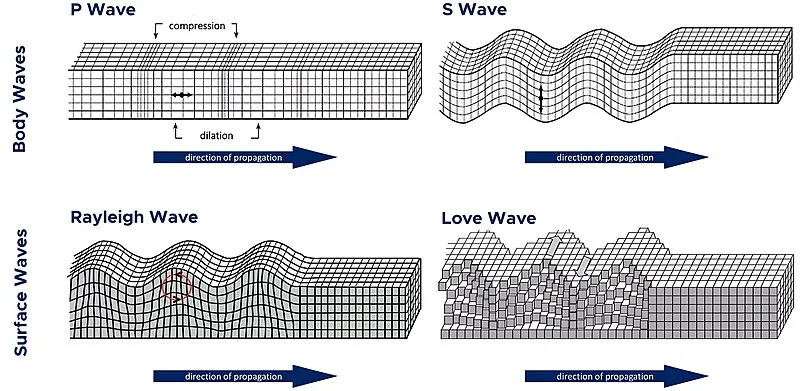
According to the report, a major glacial collapse near the Nepal–China border triggered a massive landslide and flash floods. The event initially appeared similar to an earthquake, but subsequent assessment indicated that the seismic activity was associated with the massive collapse and landslide rather than a conventional tectonic earthquake.
The disaster caused extensive destruction in Nepal, while downstream areas in India and infrastructure and connectivity on the Chinese side were also affected.
Simplified Disaster Chain
Glacial collapse
⬇️
Massive landslide
⬇️
Sudden displacement of water and debris
⬇️
Flash floods
⬇️
Destruction of settlements and infrastructure
⬇️
Cross-border flood risks
Why is this a “Shared Disaster”?
Natural systems do not follow political boundaries.
The Himalayas form a connected ecological and geographical system shared by several countries. Similarly, rivers originating in the Himalayan region flow across national boundaries.
Example
Himalayan region
⬇️
Glaciers and mountain ecosystems
⬇️
Rivers and tributaries
⬇️
Nepal
⬇️
India
⬇️
Downstream river systems
Therefore, a disaster occurring in one part of the Himalayas can have consequences for neighbouring countries.
The Nepal disaster affected all three countries—Nepal, India and China—through loss of life, damage to infrastructure and disruption of connectivity.
Impact on Nepal,India and China
Nepal suffered the most severe consequences.
According to the report:
- Hundreds of people were killed.
- Many people remained missing.
- Villages and settlements were severely damaged.
- Bridges and hydropower infrastructure were destroyed.
- Nepal’s electricity generation capacity suffered significant losses.
The destruction of infrastructure demonstrates the vulnerability of Himalayan countries to sudden and extreme natural hazards.
Impact on India
The disaster also raised serious concerns for India because many rivers originating in Nepal eventually flow into Indian territory.
Floodwaters affected or threatened major river systems, including:
- Gandak
- Kosi
- Ganga
Authorities in Bihar increased surveillance along vulnerable areas and embankments, while communities in vulnerable locations were evacuated. Uttar Pradesh also strengthened emergency preparedness in districts affected by rivers flowing from Nepal.
The National Disaster Response Force (NDRF) deployed teams in vulnerable border regions, while India activated humanitarian assistance for Nepal.
Impact on China
The disaster also affected areas near the Nepal–China border.
Important cross-border infrastructure, including roads, power supply and communication links, was damaged. The disruption of the Gyirong Port, an important gateway between Nepal and China’s Tibet Autonomous Region, highlighted how natural disasters can affect regional trade and connectivity.
The Core Message: Nature Does Not Recognise Political Borders
This is the central theme of the editorial.
Countries may have:
- Territorial disputes
- Strategic competition
- Political differences
- Security concerns
But disasters such as:
- Floods
- Earthquakes
- Landslides
- Glacial lake outburst floods
- Avalanches
can affect multiple countries simultaneously.
Therefore:
Shared geography requires shared responsibility.
Himalayas: A Shared Ecological System
The Himalayas are often described as a region of immense ecological importance.
They influence:
- Major river systems
- Water security
- Agriculture
- Hydropower
- Biodiversity
- Climate patterns
A disturbance in one part of the Himalayan ecosystem can therefore produce consequences beyond national borders.
Transboundary Environmental Challenge
A transboundary environmental challenge is a problem whose causes or consequences extend beyond the borders of one country.
Examples include:
- River pollution
- Floods
- Air pollution
- Climate change
- Glacier melting
- Biodiversity loss
Climate Change and Himalayan Disasters
Climate change is increasing concerns regarding the Himalayan region.
Rising temperatures can contribute to:
- Glacier retreat
- Formation and expansion of glacial lakes
- Unstable mountain slopes
- Extreme precipitation
- Landslides
- Flash floods
However, it is important for UPSC answers not to attribute every individual disaster solely to climate change without scientific assessment.
What is a Glacial Lake Outburst Flood (GLOF)?
A related UPSC concept is the Glacial Lake Outburst Flood (GLOF).
How does it occur?
Glacier melts
⬇️
Water accumulates behind natural barriers
⬇️
Glacial lake expands
⬇️
Barrier fails or collapses
⬇️
Sudden release of enormous quantities of water
⬇️
Flash floods downstream
The Himalayan region is particularly vulnerable to such cascading hazards.
Disaster as a “Cascade”
Modern disaster management increasingly recognises that one hazard can trigger another.
Example
Glacial collapse
⬇️
Landslide
⬇️
River blockage
⬇️
Sudden release of water
⬇️
Flash flood
⬇️
Infrastructure collapse
⬇️
Power disruption
⬇️
Communication failure
This is called a cascading disaster.
Why is India–Nepal–China Cooperation Necessary?
- Early Warning Systems
Countries should share:
- Rainfall data
- River flow data
- Glacier monitoring information
- Landslide warnings
- Satellite observations
Early information can help downstream countries evacuate people and protect infrastructure.
- Scientific Cooperation
The Himalayan environment requires joint scientific research.
Cooperation can include:
- Glacier monitoring
- Remote sensing
- Climate research
- Landslide mapping
- River basin studies
- Seismic monitoring
This can be described as Science Diplomacy.
- Disaster Data Sharing
One of the biggest challenges in transboundary disasters is the lack of timely information.
Countries need mechanisms for:
Real-time information sharing → Early warning → Faster evacuation → Reduced loss of life
- Humanitarian Assistance and Disaster Relief (HADR)
During disasters, geopolitical differences should not prevent humanitarian cooperation.
India’s response in providing emergency relief demonstrates the importance of Humanitarian Assistance and Disaster Relief (HADR) in foreign policy.
Challenges to Trilateral Cooperation
Despite the need for cooperation, several obstacles remain.
- India–China Strategic Rivalry
India and China have unresolved border issues and strategic competition.
- Trust Deficit
Sharing sensitive geographical and hydrological information may raise strategic and security concerns.
- Different Institutional Capacities
Nepal, India and China have different levels of:
- Infrastructure
- Technology
- Disaster preparedness
- Administrative capacity
- Data Sensitivity
Information related to:
- Water
- Rivers
- Dams
- Border regions
may sometimes be viewed through a security lens.
Way Forward: Cooperation Beyond Geopolitics
The editorial’s key argument is not that geopolitical differences will disappear.
Instead, it argues for compartmentalisation.
What does compartmentalisation mean?
Countries may continue to have disagreements on:
- Borders
- Security
- Strategic influence
But simultaneously cooperate on:
- Disaster management
- Climate research
- Early warning
- Humanitarian assistance
- River management
This approach can be called:
Cooperation despite competition.
The editorial argues that Nepal, India and China need mechanisms that allow cooperation on shared natural threats even when broader geopolitical relations remain difficult.
Related
Discover more from Primus Civil Services Academy
Subscribe to get the latest posts sent to your email.